
← Innovation portfolio
CAVIARUM · TORONTO, CANADA
CAVIARUM
From a premium caviar-analogue idea to purpose-built equipment, commercial production, a distinctive brand and a product presented to the market.
THE CHALLENGE
Could a premium caviar experience be recreated without taking caviar from sturgeon?
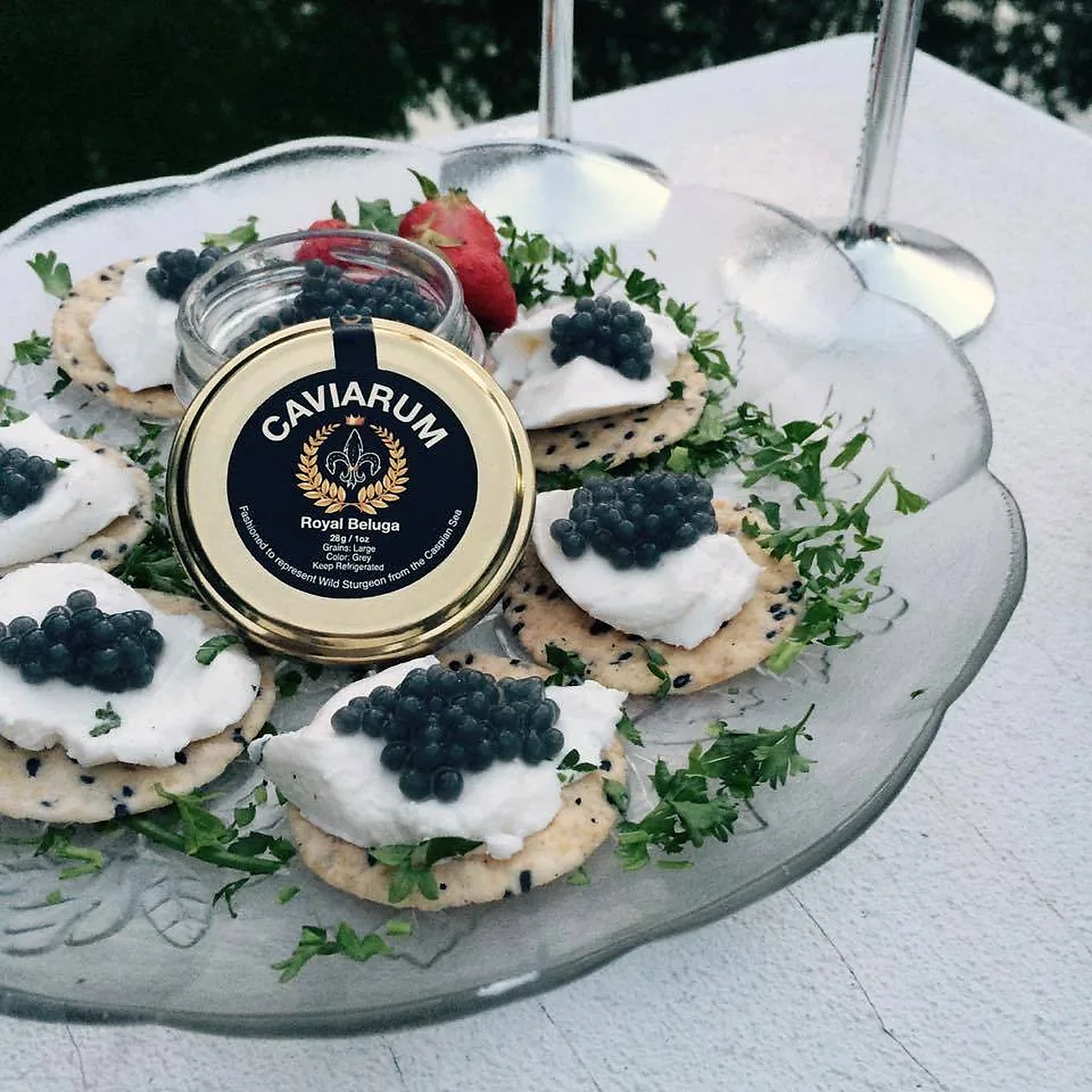
Caviarum was developed as an alternative to natural sturgeon caviar: a food product intended to reproduce the visual, textural and sensory cues associated with premium caviar while avoiding the need to obtain roe from sturgeon.
An archived Caviarum press release describes 2–3 mm grey/black pearls, a pronounced marine flavour and individual spheres designed to pop in the mouth. The same document describes a formulated fish-based matrix and a dedicated breakthrough process rather than sturgeon roe.
2–3 mmdocumented pearl size
Torontodevelopment and production base
2015documented commercial-production archive
HOW CAVIARUM BEGAN
A project built through an idea, trust, engineering and production.
The initiative to create Caviarum came from Igor Kuntzevitsky. With the support of an influential Canadian businessman known publicly here as Dan — whose full name is not being disclosed at this time — Igor invited Andrey Yatsenyuk to join the venture. Andrey was brought in as a specialist in caviar technology and the industrial equipment required to make it; he later created Innovatorius.
Andrey helped turn the initial idea into an integrated product-and-production system. His contribution encompassed work on the caviar analogue, the production method and purpose-built equipment, as well as the name Caviarum and the original concept for its visual identity.
Production began at the Toronto factory then operating as Central-Epicure Food Products Limited. The factory’s owners gave the project far more than premises: they welcomed it onto their production site, made facilities and practical resources available and provided extensive professional assistance. Their support created the conditions in which the concept could move from development into real manufacturing.
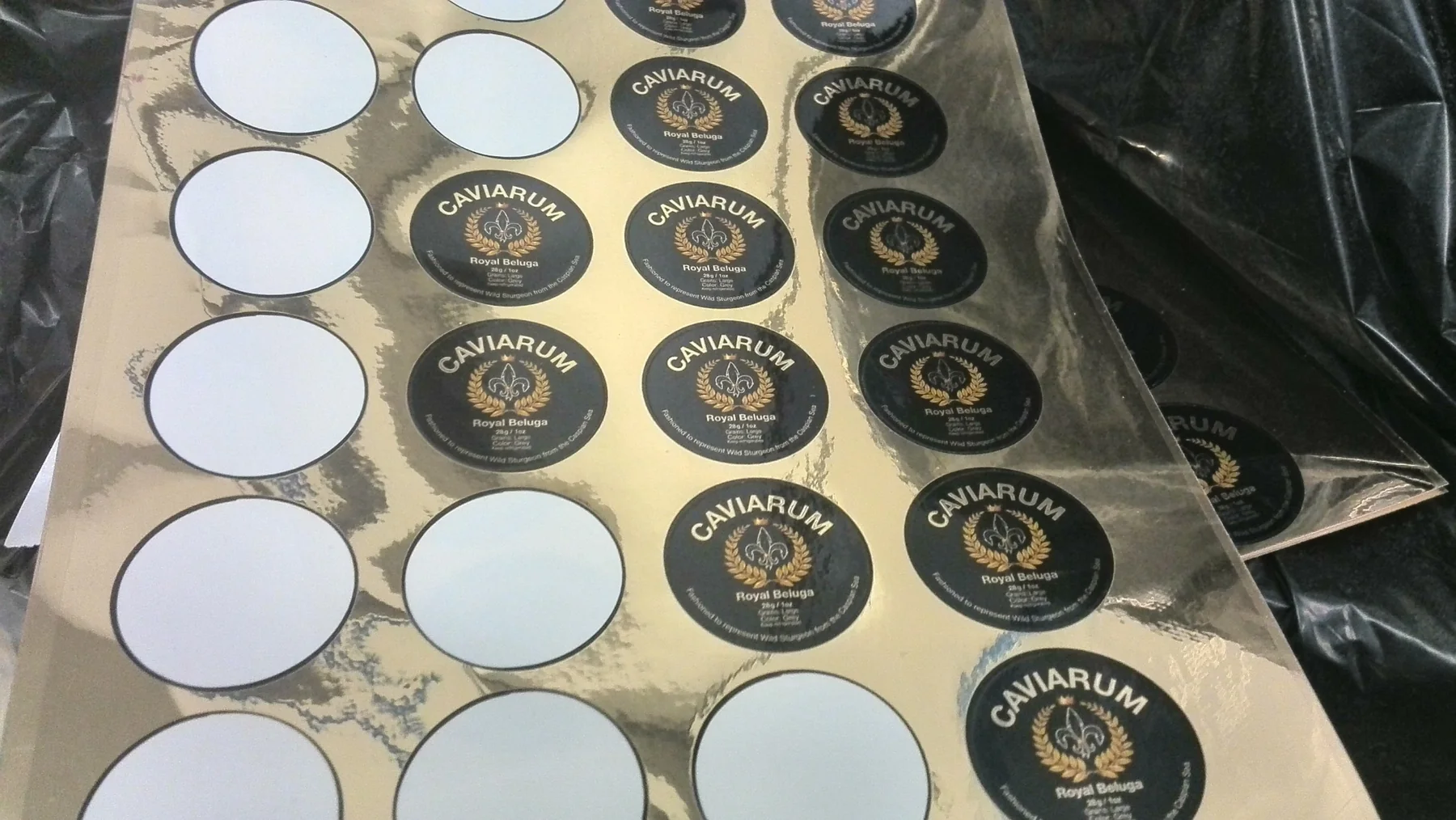
At this early stage, Josef Bener made an important personal contribution by preparing the first Caviarum label-design studies for the 2-, 4- and 8-ounce glass jars used to pack the product. He later joined the venture as a caviar maker and continues to produce several Caviarum products at CaviCan.
Caviarum was therefore not the work of a single isolated idea. It grew through Igor Kuntzevitsky’s initiative, Dan’s support, Andrey Yatsenyuk’s product, engineering and brand work, the practical and professional commitment of Central-Epicure’s owners and Josef Bener’s early design and later production contribution.
PURPOSE-BUILT PROCESS
A new product required a new way to make it.
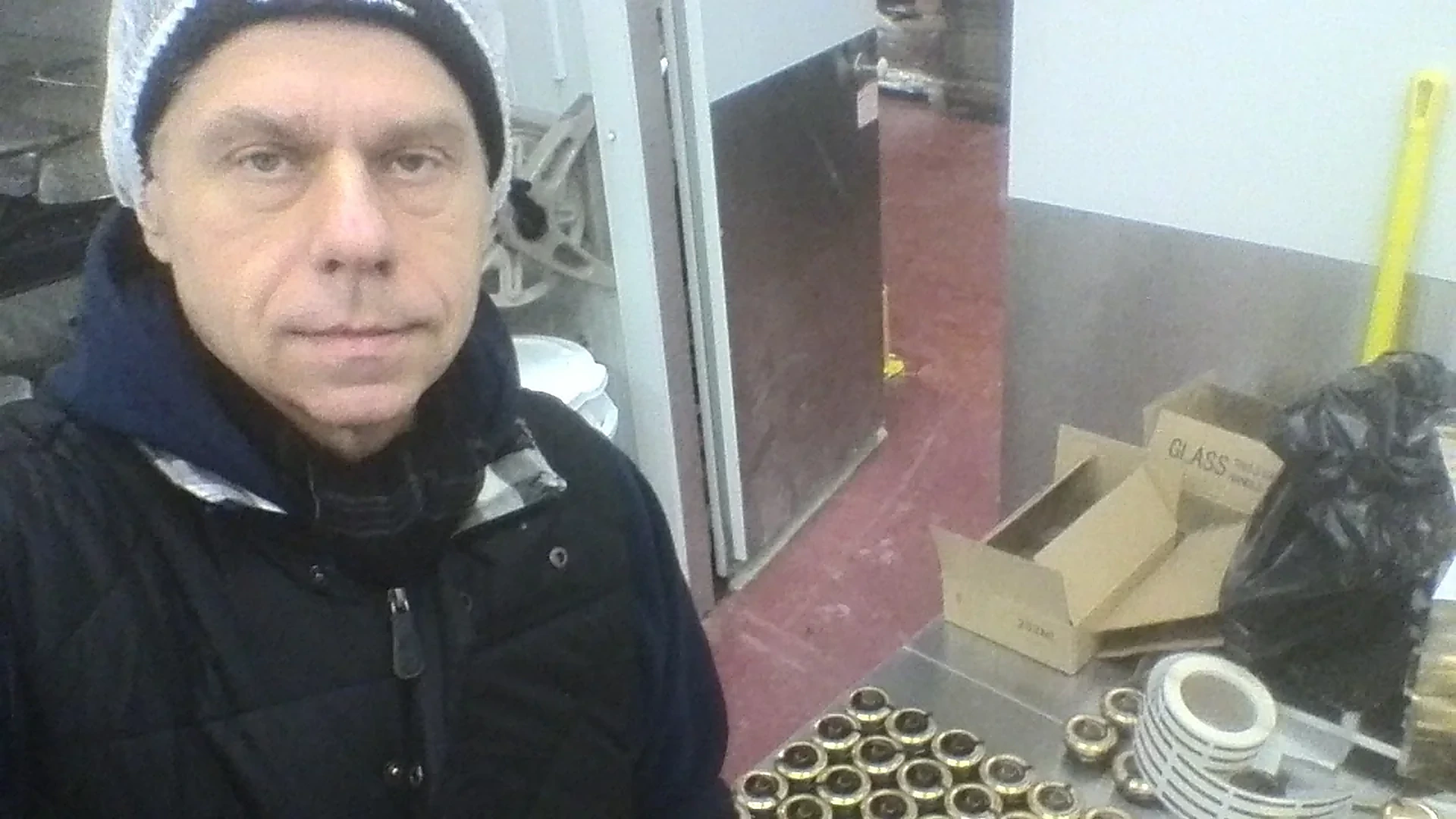
The project video preserved by Innovatorius shows the forming process and the dedicated equipment used for the caviar analogue. It documents equipment that existed and operated, while exact geometry, ratios and operating parameters remain confidential.
Project video · original audio retained
PRODUCTION EVIDENCE
Built, packed and released — not merely imagined.
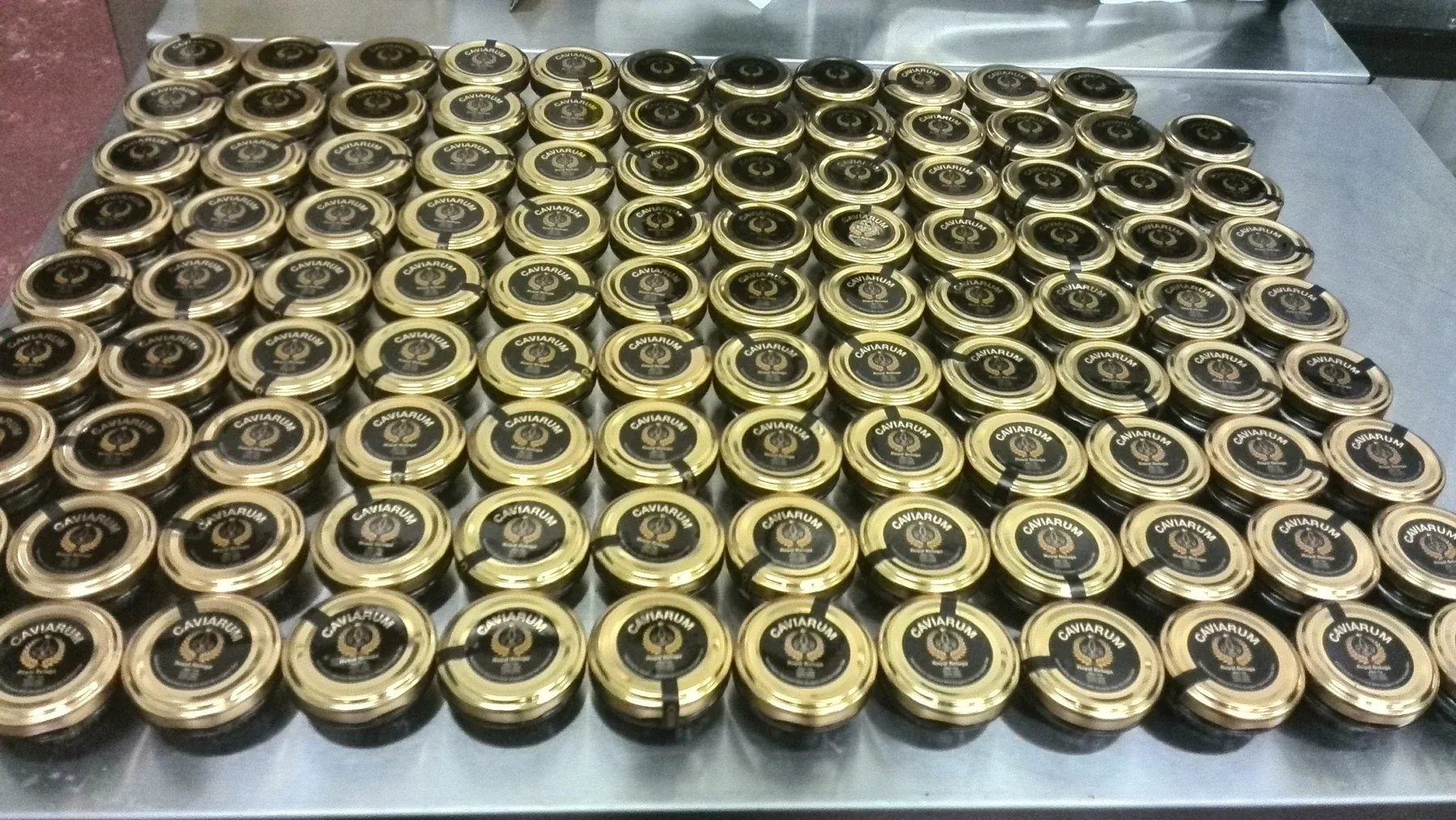
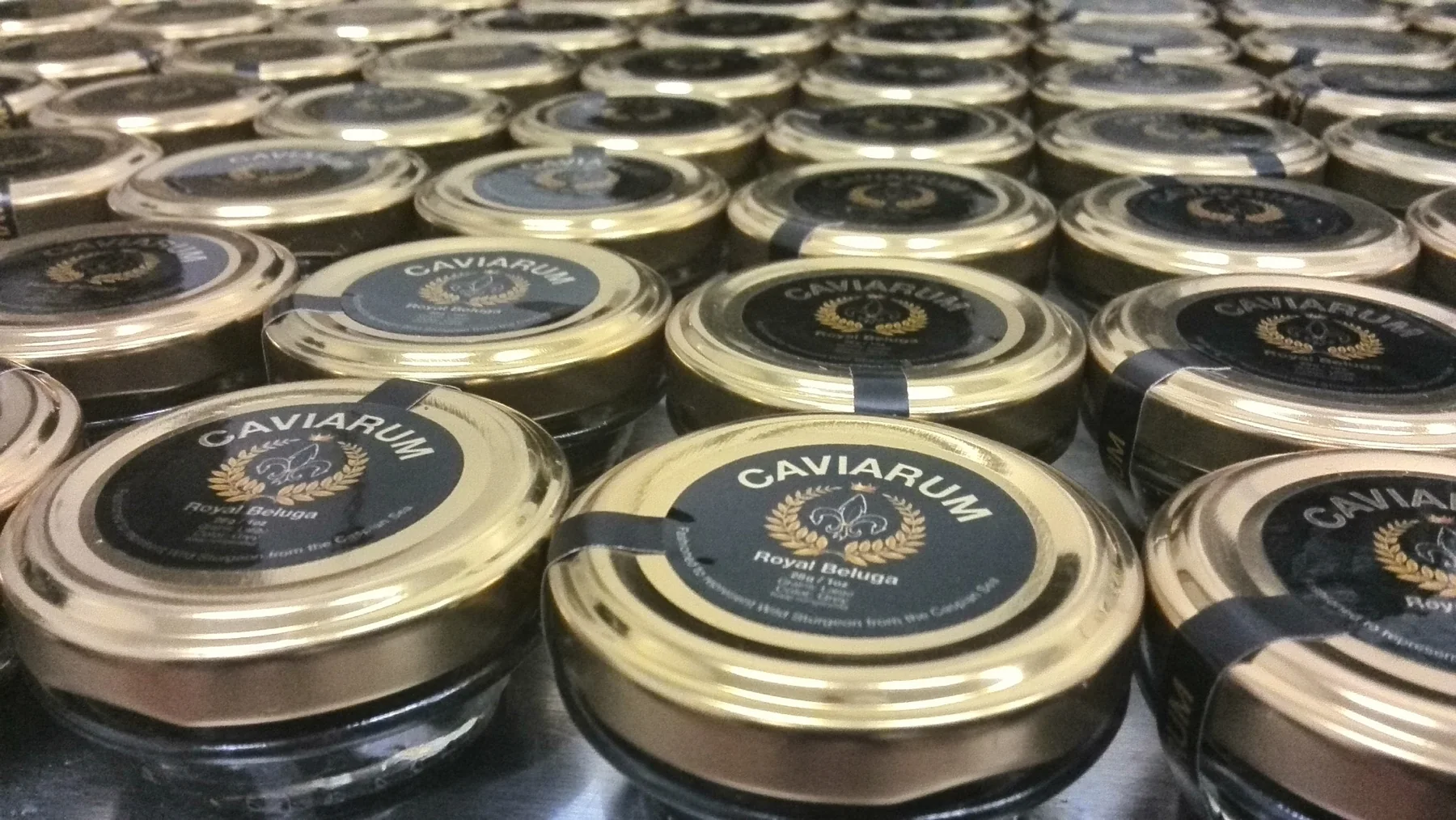
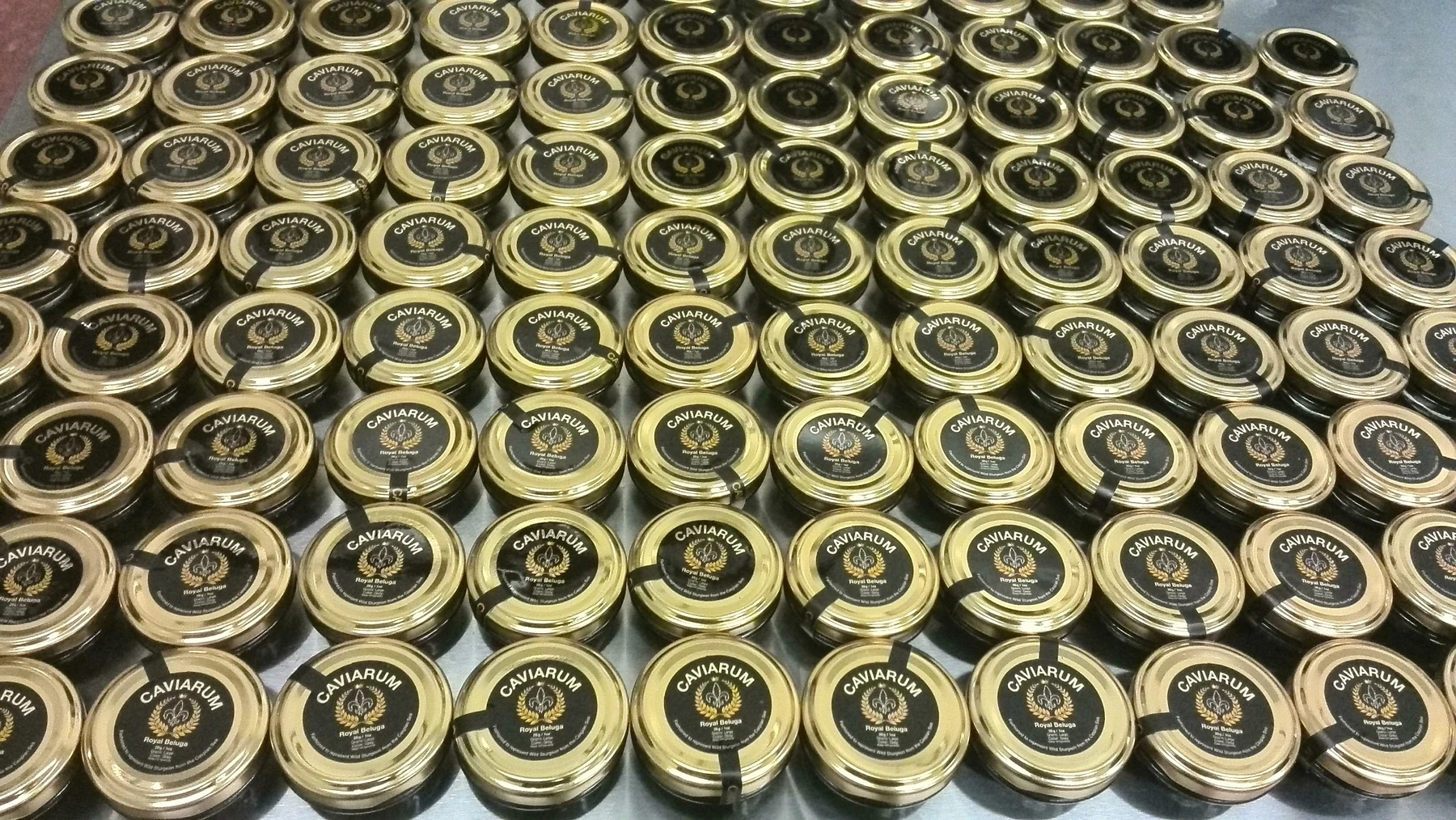
Photographs from the production archive show large batches of Caviarum Royal Beluga jars, label application, tamper bands and finished retail presentation on stainless production surfaces. File names from this production series carry the date 25 February 2015, providing a dated record of commercial production.
BRAND ORIGIN
CAVIARUM
Andrey Yatsenyuk created the name Caviarum as CAVIAR + UM. Its Latinised ending was chosen to echo scientific element names such as Sodium and Calcium, positioning Caviarum as a precisely conceived reference product rather than simply another caviar substitute. Later brand materials also preserved the CAVIAR + UM construction.
The name carries a second, Russian-language idea: «ум» (um) means “mind” or “intellect”. It can therefore also be read as a conceptual union of caviar and intelligence — “smart caviar”, or caviar made with thought, ingenuity and engineering.
Three fish, a troika and a fleur-de-lis.
The emblem was conceived as a layered symbol: three stylised sturgeon forms refer to valuable sturgeon species; their arrangement evokes the traditional Russian troika — a three-horse team — and Russia’s historical association with fine sturgeon caviar; the combined silhouette also resembles a heraldic fleur-de-lis, reinforcing the royal and premium idea. Andrey Yatsenyuk created the emblem concept; Josef Bener translated that concept into the first Caviarum label-design studies for 2-, 4- and 8-ounce glass jars.
A PRODUCT PLATFORM
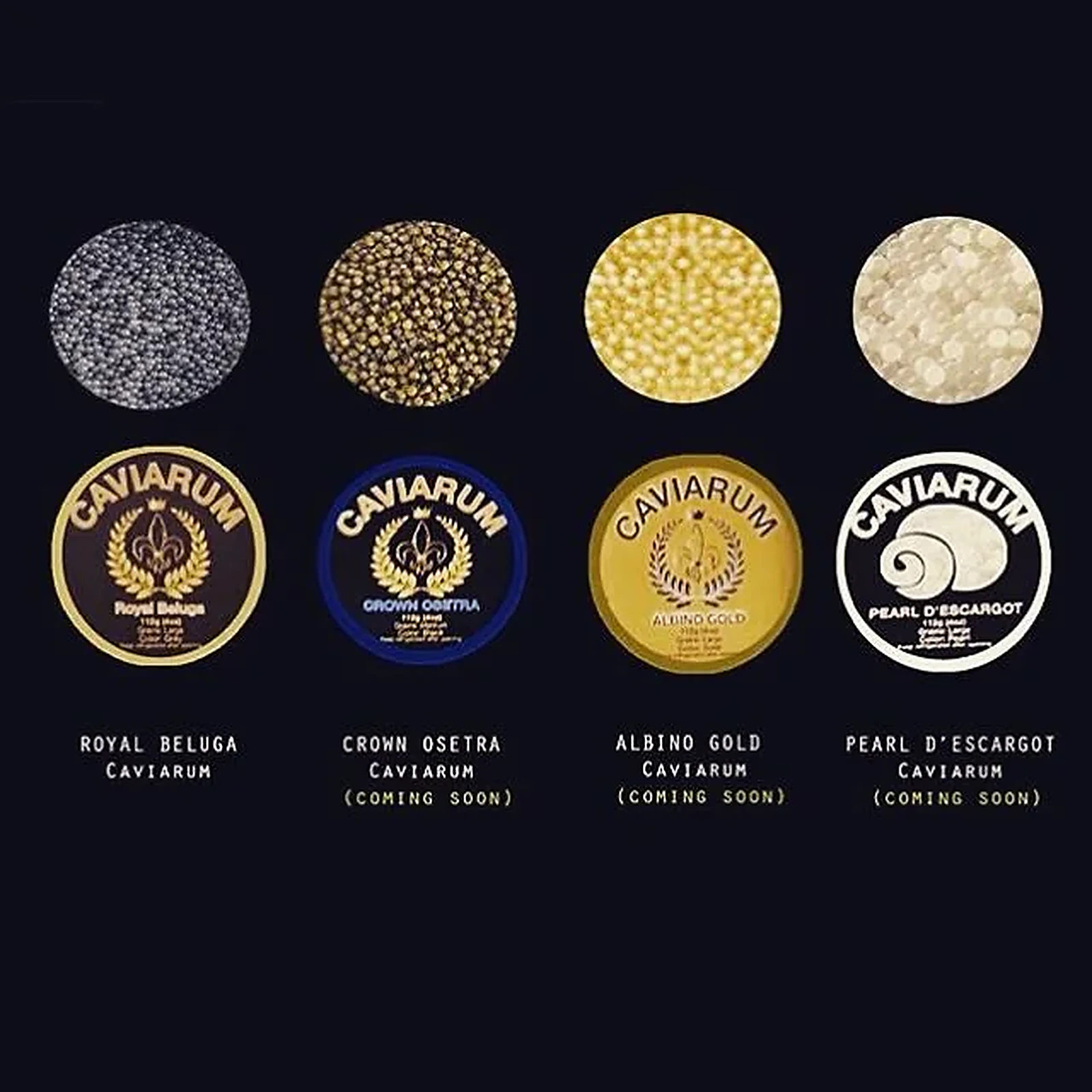
Royal Beluga was the beginning, not the whole idea.
An archived presentation of the Caviarum range: Royal Beluga and the then-planned Crown Osetra, Albino Gold and Pearl d’Escargot variants. The original “coming soon” labels are preserved.
FROM TORONTO OUTWARD
The project moved into real hospitality and international-market contexts.
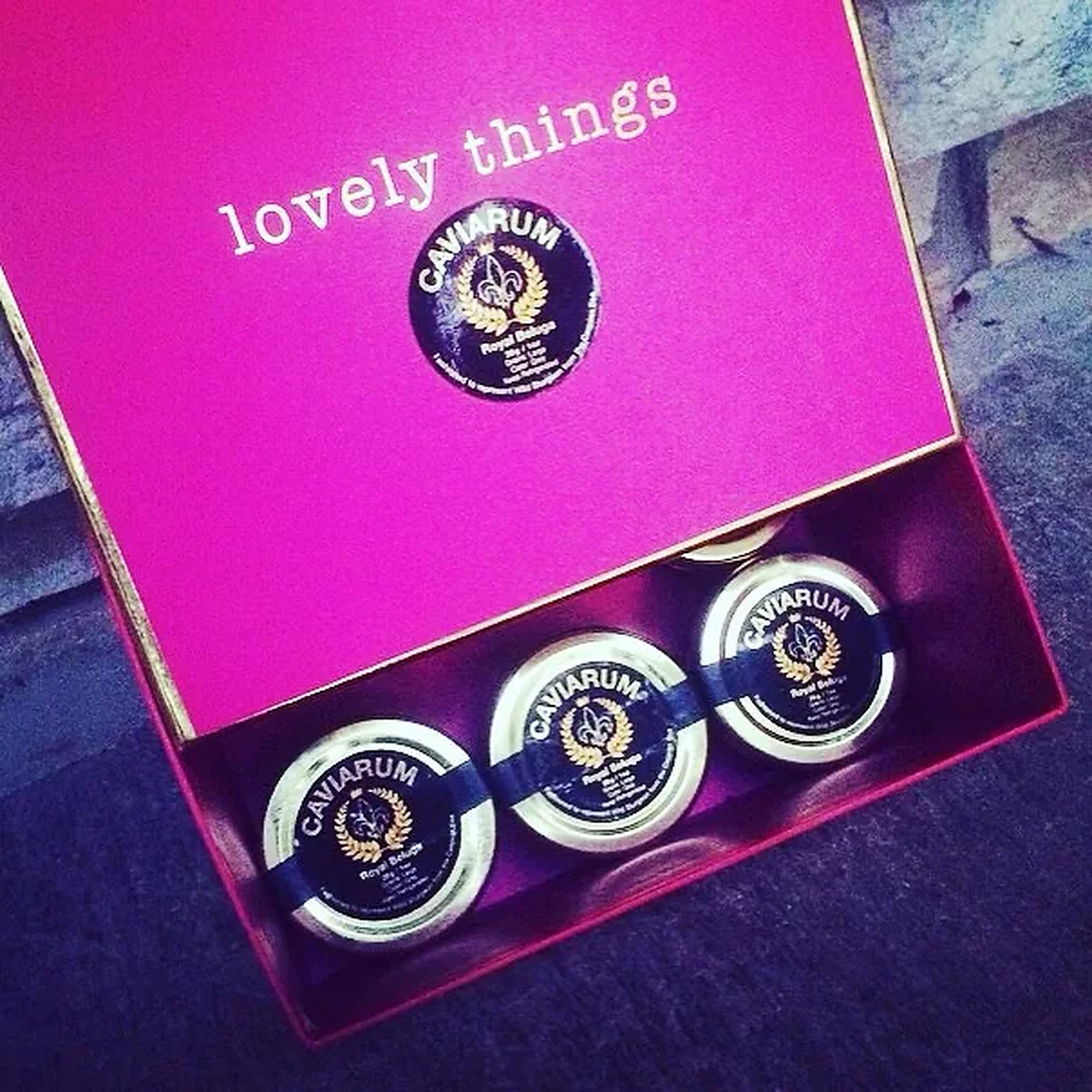
Project materials include tastings, premium presentation, gift packaging and event documentation. A 2015 Caviarum press release records the brand at Seafood Expo Asia in Hong Kong, 8–10 September 2015, Booth 5-928. The Caviarum website from that period also contained country pages, representatives, ordering and free-sample routes — evidence of a market-facing project rather than a laboratory-only prototype.
PRESENTATION & EVENTS
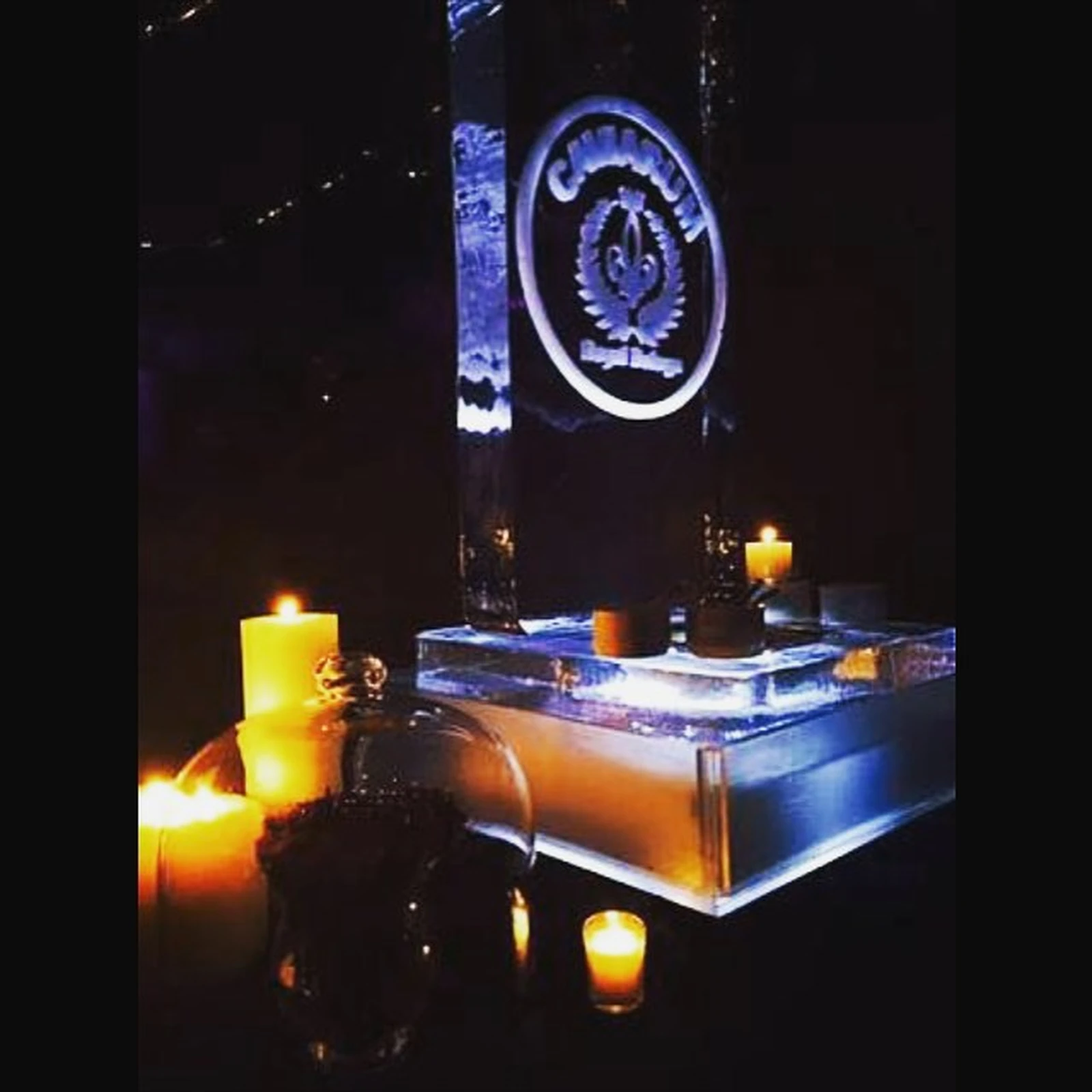
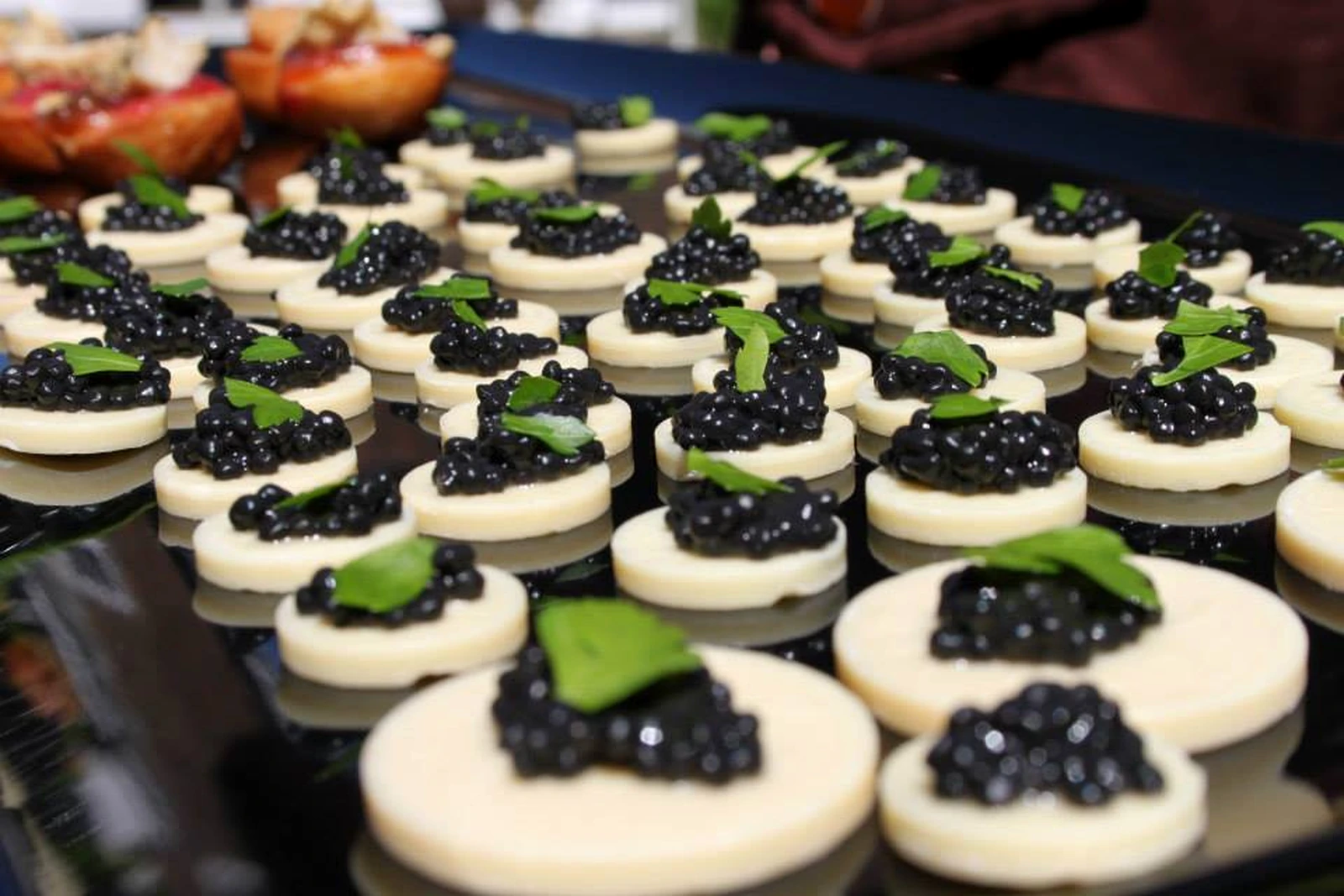
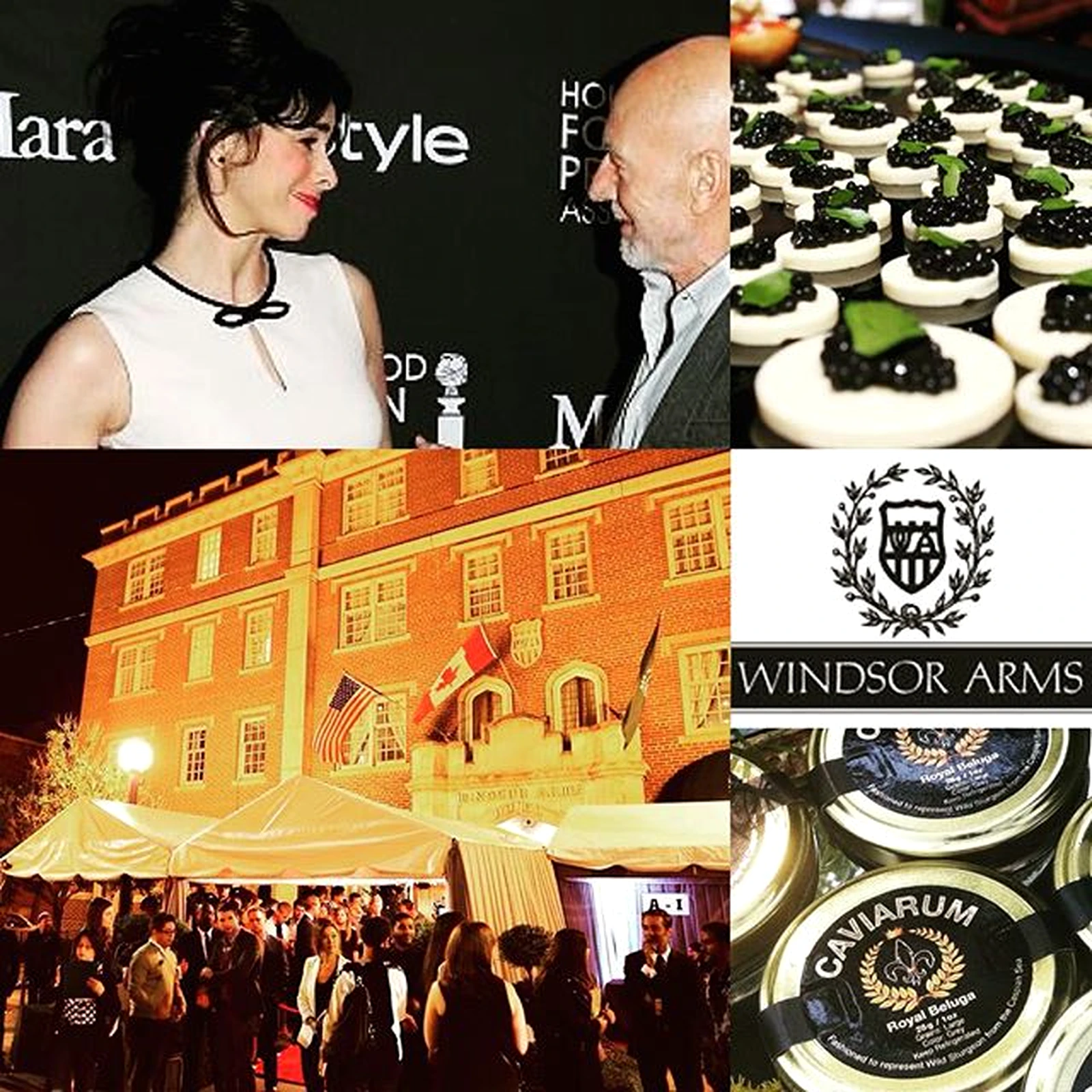
Caviarum in tastings, events and premium presentation.
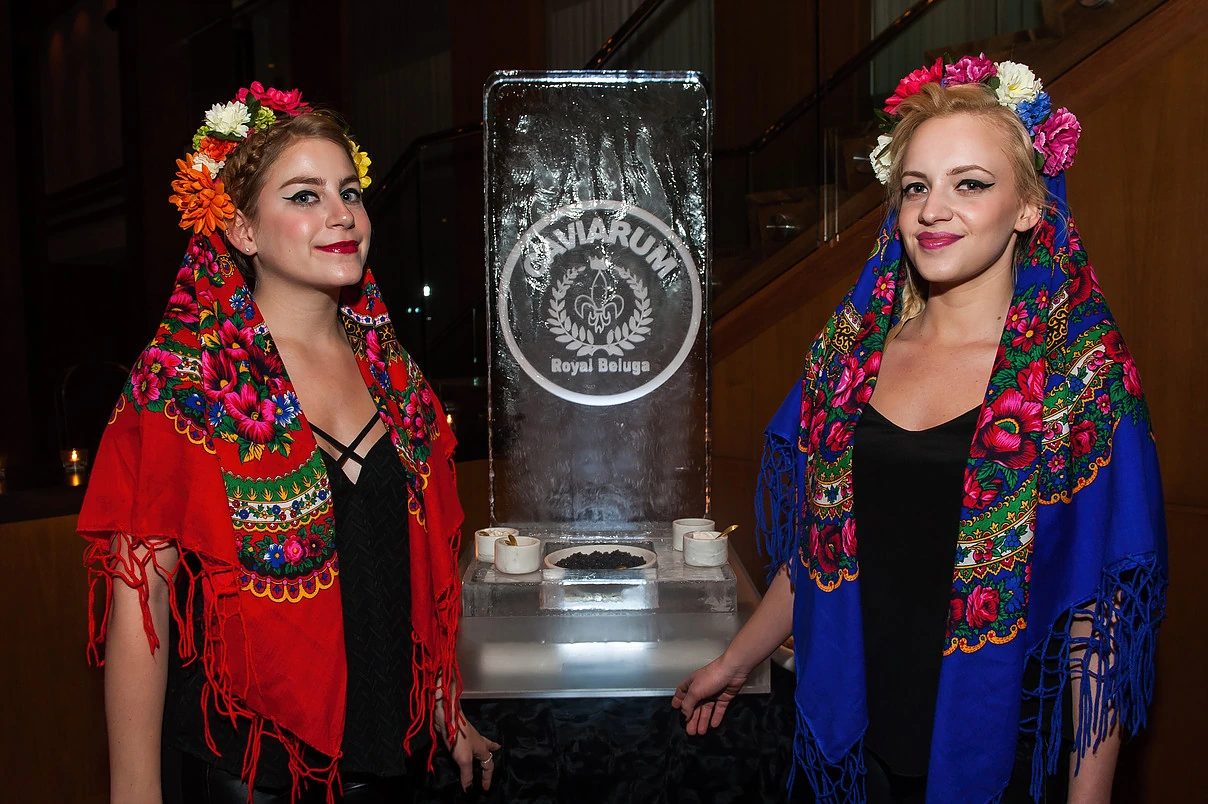
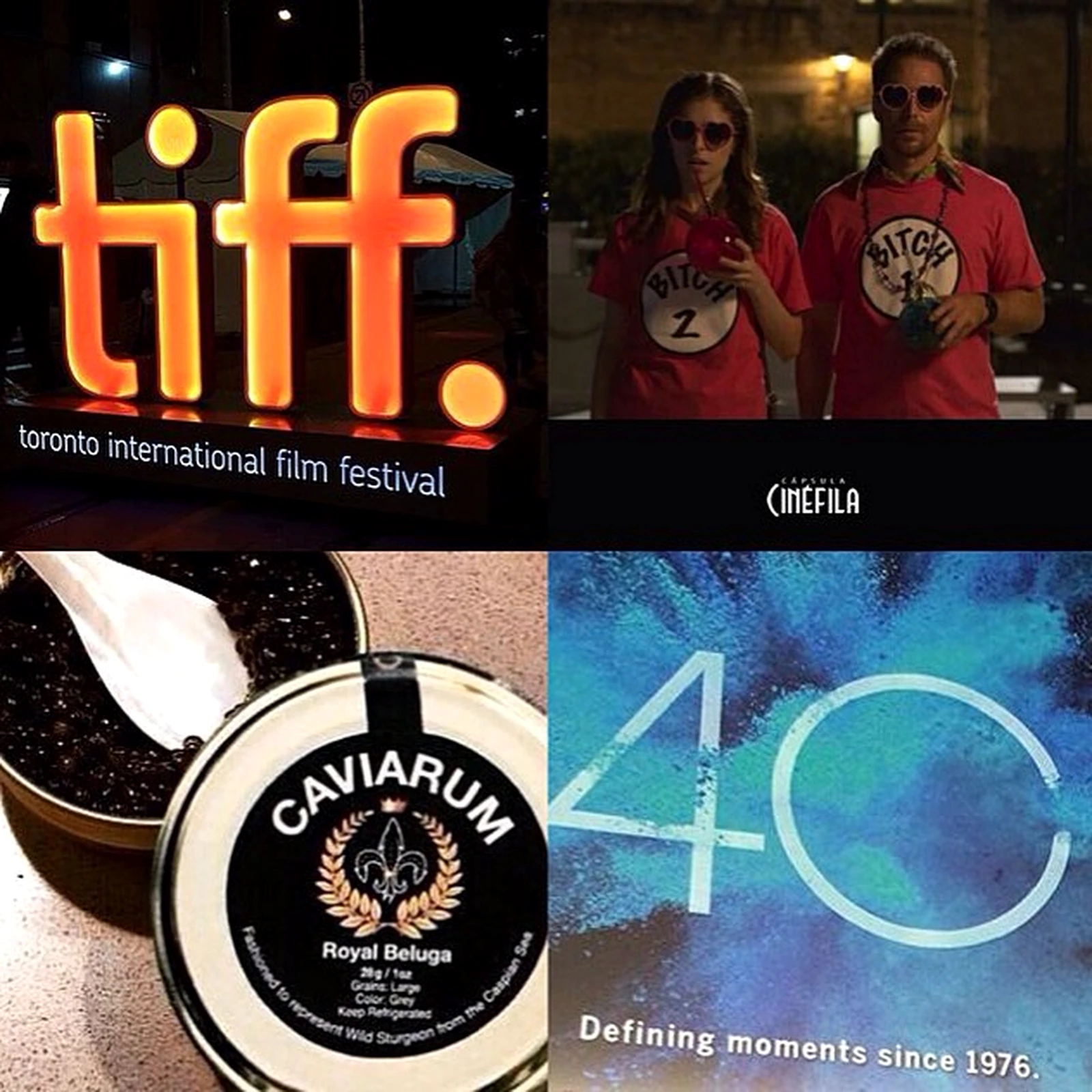
The Caviarum presentation and hospitality archive, including material associated with Windsor Arms and TIFF.
TERMINOLOGY USED AT THE TIME
What “No Kill” meant in the original story.
Historical Caviarum materials used expressions such as “No-Kill”, “cultured caviar” and “harvesting”. On this site the technology is described more precisely: Caviarum was an engineered caviar analogue based on formulated fish-derived components, designed to reproduce premium caviar characteristics without obtaining roe from sturgeon. Historical wording is preserved as evidence of how the brand was presented at the time, not repeated as a technical definition.
FROM PRODUCT TO BUSINESS NETWORKS
When a food-tech project reached a wider business circle.
According to accounts from participants in the original project, product samples reached Donald and Melania Trump during the period when Donald Trump was known primarily as an international businessman. Participants recall a favourable reaction to the conservation-oriented concept and a support/promotional banner subsequently appearing on the historical Caviarum site. This episode is presented as participant testimony from the project record — not as a political statement, current endorsement or verified corporate partnership.
The political career of any individual mentioned here is outside the scope of this historical product case.
CAVIARUM TODAY
The product continues in Toronto.
The Caviarum story continues in Toronto. Josef Bener, who helped create the first label studies and later became a caviar maker within the project, continues to produce several Caviarum products at CaviCan. For Innovatorius, the project illustrates a complete path from a founding idea through equipment, production and brand development to a commercial product.
Visit the current Caviarum producer →INNOVATORIUS
What Caviarum demonstrates
Caviarum connects food formulation, equipment design, manufacturing, brand naming, visual identity and market development. It is a concrete example of the cross-disciplinary way Innovatorius approaches innovation.
Explore the current innovation portfolio