Health research · Prototype · individual observation over 40 days
Topical formulation research in skin oncology — documented 40-day record
An Innovatorius research record combining a topical-formulation prototype with a 40-day photographic sequence documenting visible changes in one person’s skin.
Prototype · individual observation over 40 daysHealth researchPrototype details not published
Current statusPrototype · individual observation over 40 daysA topical-formulation prototype and an individual skin observation record. The materials are available for professional discussion and further research.
18Project overview
Concept
The idea
An Innovatorius research record combining a topical-formulation prototype with a 40-day photographic sequence documenting visible changes in one person’s skin.
Topical-formulation prototype
Visible changes documented over time
Photographic sequence over 40 days
Option for independent scientific or medical review
The interactive archive covers the full sequence: days 1, 5, 10, 15, 20, 25 and 40. Any two stages can be compared.
Further work
The project is open to scientific collaboration and discussion of further development with specialist partners.
How the project could develop
Prototype, observations and further research.
01
What the project addresses
Explore the potential of the topical formulation and follow visible changes in the skin lesion throughout the observation period.
02
Our approach
Bring together the formulation prototype, original photographs and a chronological account of visible changes for specialist analysis.
03
Research potential
The project is open to research collaboration, independent assessment of the formulation and observations, and discussion of further development with specialist partners.
DOCUMENTED PHOTOGRAPHIC RECORD
40 days of observation: changes in the skin lesion
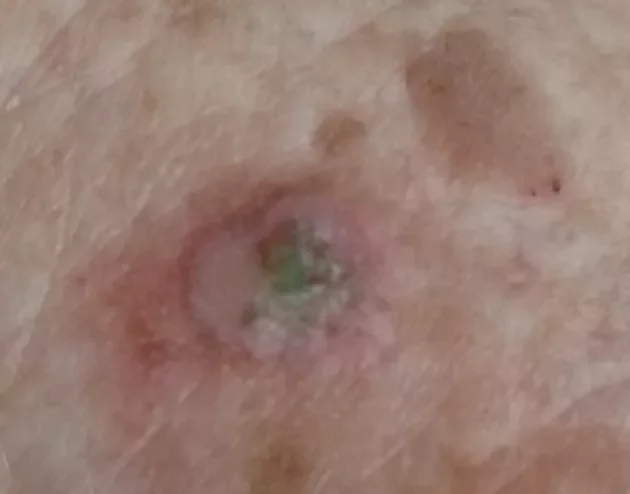
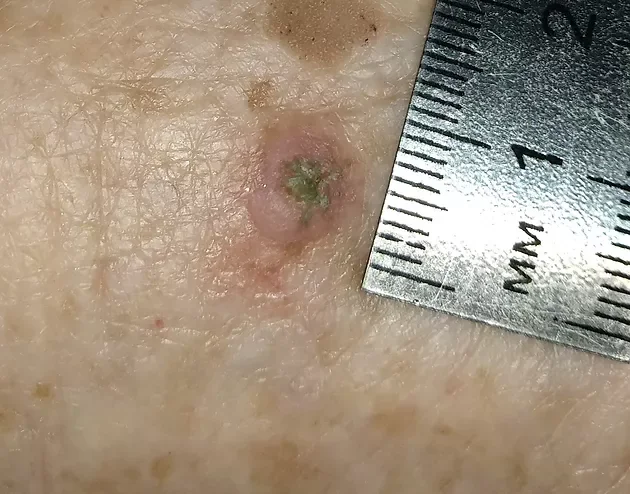
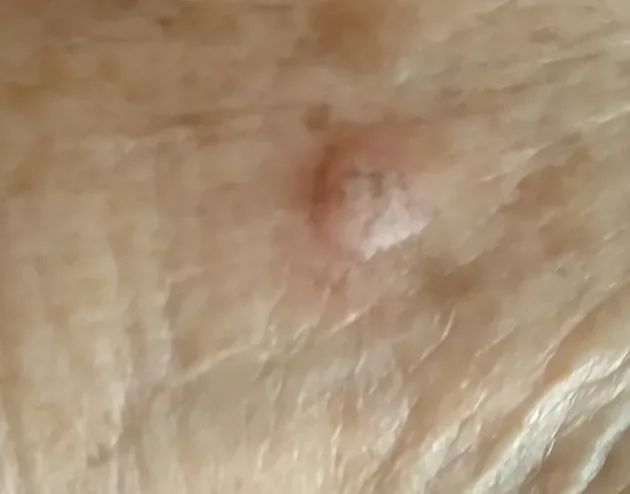
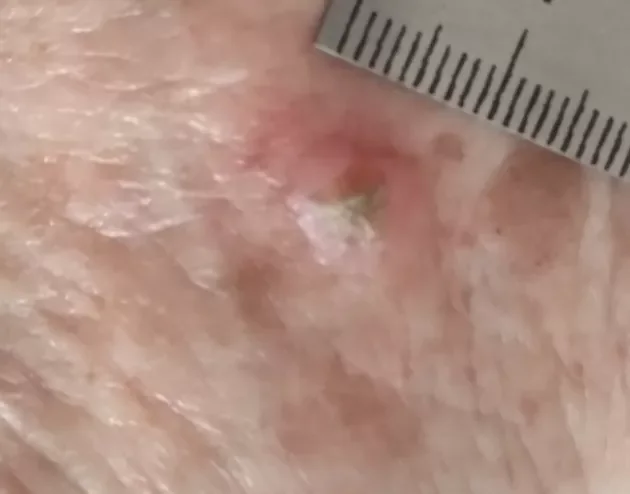
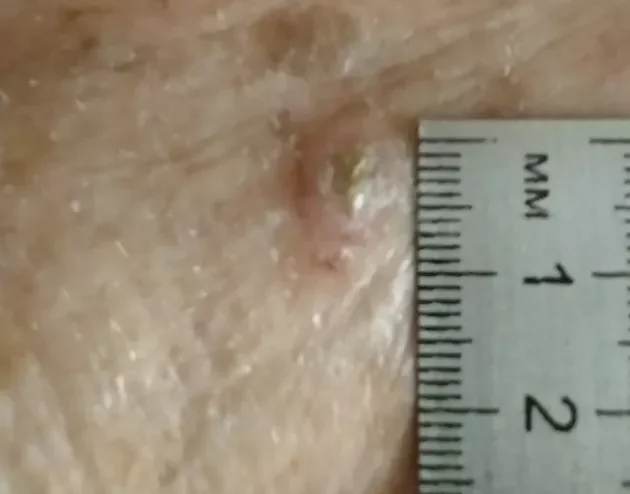
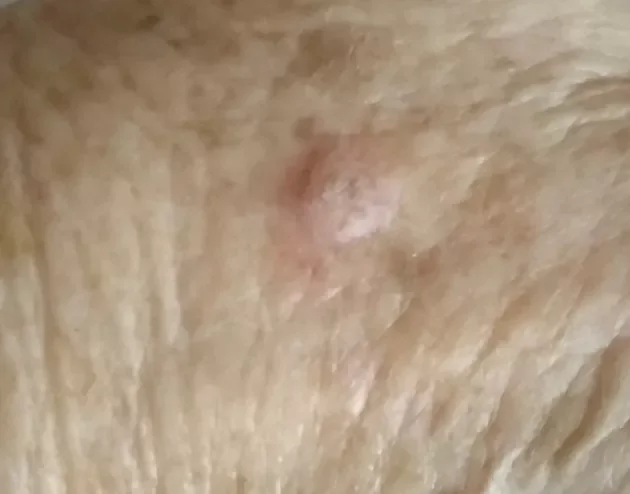
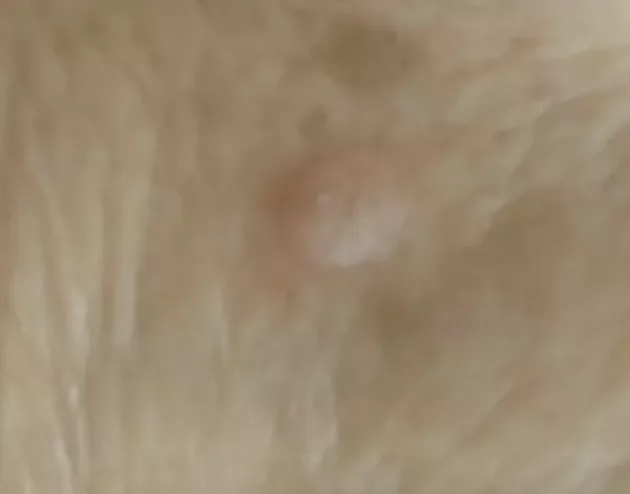
The photographic timeline of this Innovatorius research project shows changes in the external appearance of a skin lesion during use of the developed formulation. According to the project author, the observation concerns a cancerous skin lesion.
Over the documented period, the visible changes became noticeably less pronounced: the initial lesion, with surrounding redness and an altered central surface, gave way to a substantially less conspicuous residual area. The sequence includes an interim increase in redness followed by an improvement in external appearance.
Day 1 · Start of documented period→Day 40 · Final documented image
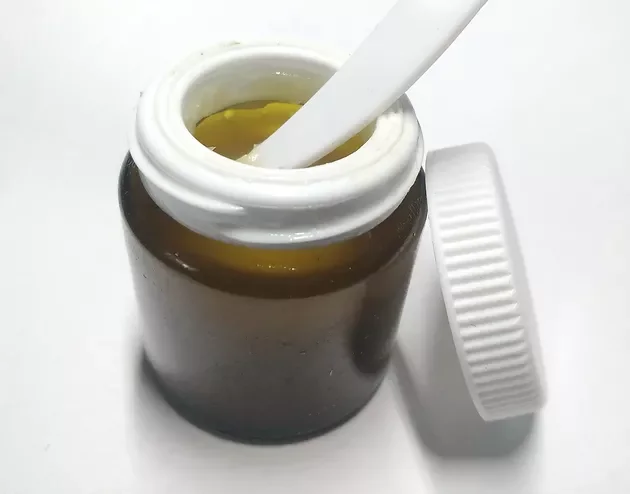
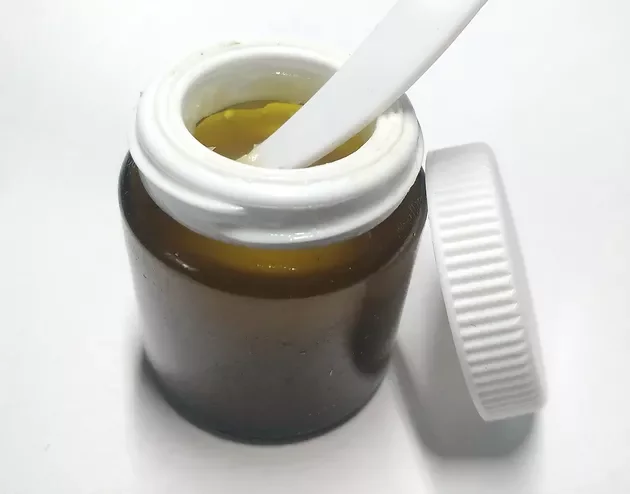
Prototype formulation
Topical formulation prototype
The complete observation cycle: 40 days
All seven archive photographs in chronological order. Play the full sequence, pause at any stage or choose a day on the timeline.
Sequential display of the seven original photographs. Each frame identifies the observation day.
Additional view: compare any two photographs
Compare photographs across the 40-day archive
Choose any two archive days. Move the divider or use the slider to compare the original photographs.
↔
Choose the right-hand photograph
Choose any two days for visual comparison, taking differences in viewpoint, lighting and scale into account.
Day 1 — Initial appearanceA clearly visible lesion with a central crust and noticeable redness of the surrounding skin.Day 5 — Early observationThe central crust and redness remain. The photograph with a ruler records the appearance and boundaries of the lesion at this stage.Day 10 — Surface changesThe central surface appears lighter; the prominent dark crust is no longer discernible. A pinkish rim remains around the area.Day 15 — Interim increase in rednessRedness becomes more noticeable again. The central area continues to change.Day 20 — Less pronounced rednessCompared with the preceding stage, the surrounding redness appears less pronounced. A small altered area remains in the centre.Day 25 — Less conspicuous external changesThe central surface appears light, with a pinkish periphery. The crust characteristic of the first images is no longer discernible.Day 40 — End of the documented periodThe lesion stands out substantially less against the surrounding skin. A small light area remains; the observer reports a small residual bump.
What the record can support
Archive analysis and project development.
Further work can include formulation analysis, independent assessment of the observations and planning additional studies with relevant specialists.
01
Source material & provenanceOriginal files, dates and context are part of the project record.
02
Visible changesCompare the lesion at each stage: its surface, redness and visible skin contours.
03
Independent reviewA specialist can examine the photographic sequence alongside medical records and propose a programme of further research.
04
Further researchIf useful, a formal study could be considered around a defined research question.
Possible expertise
Scientific and technical collaboration.
The project is open to research collaboration, independent assessment of the formulation and observations, and discussion of further development with specialist partners.
01Independent scientific reviewers
02Dermatology and oncology specialists
03Research-design and regulatory specialists
What is public
Discuss the next stage.
A topical-formulation prototype and an individual skin observation record. The materials are available for professional discussion and further research.
Photographic record published · prototype details remain confidential